

The Scent of Clean
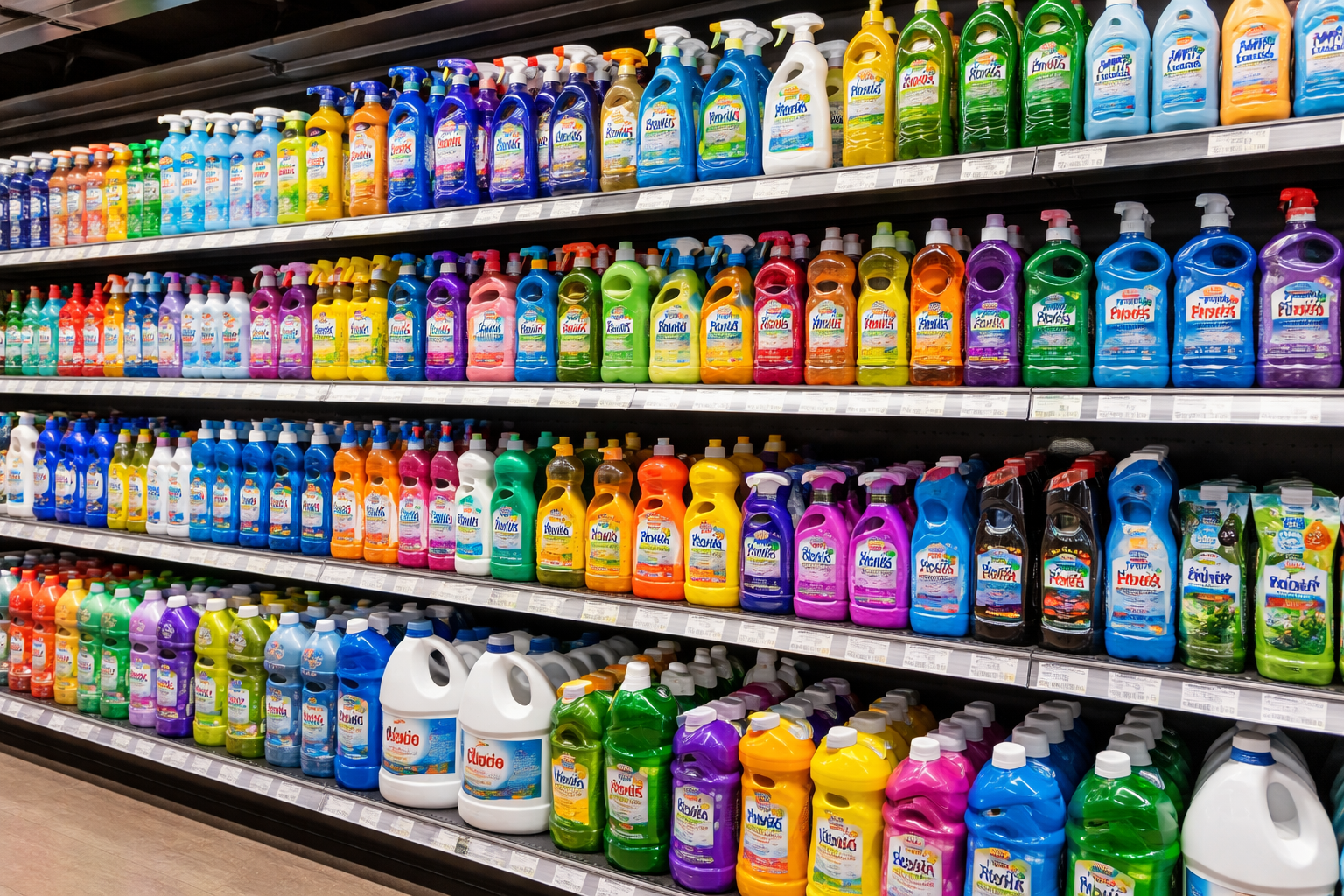
The Dangerous Lie Hidden in Cleaning Products.
I often pause in the cleaning aisle of supermarkets. I watch families open the bottles, inhale deeply, and smile as they sense that “Fresh Lemon” or “Intense Lavender” aroma. For most people, that smell is synonymous with hygiene and safety.
For me, as a scientist specialized in biomaterials, it is a biological warning signal.
What I am about to share with you today brings together two realities that the industry has tried to keep separate. The first is the visible scandals that make the news, and the second is the invisible toxicity you touch with your hands every day while washing dishes
When “Clean” Brings Bacteria
Recently, consumer confidence was shaken when we saw an industry giant and market leader recall millions of products.
That brand’s case was emblematic: 4.9 million bottles were recalled because their preservatives failed; the reason: dangerous bacteria of the Pseudomonas genus were growing inside.
For the record, Pseudomonas is a type of bacteria that primarily affects children, the elderly, and people with weakened immune systems, and transmission occurs through inhalation.
We are not talking about an unknown brand — we are talking about a household icon and a symbol of trust across many Latin American countries. It is important to mention that, like this case, there have been many others that did not receive as much attention.
Even brands marketed under a green or eco-friendly banner, such as Art of Green, suffered the same fate due to bacterial contamination. Even worse was the case of Suavitel, where benzene — a confirmed human carcinogen linked to leukemia — was detected in products used to soften our children’s clothes.
The Scent of Clean
Today, many companies provide cleaning or laundry services, and even in some households, homemakers dilute this product with water and spray it onto clothing to intensify the “clean” scent, without realizing the serious harm they may be causing or the danger they are exposing themselves to.
It is worth noting that these headlines, although alarming, also fail to explain that the real problem lies in the high doses of fragrance used in cleaning products or fabric softeners. Instead of removing bad odors by eliminating the responsible bacteria, they simply mask them.
This is where we, as consumers, must reflect: Fragrances do not eliminate bacteria — they perfume. An odor neutralizer neutralizes bacteria, and remember: neutral does not smell.
This also applies to detergents, where reducing the bacterial load is essential to achieve better results, with deep cleaning and a pleasant, healthy* and delicate fragrance: That is the true smell of clean — without toxins.
Fragrances may not be healthy if they contain parabens, which can cause severe skin irritation or enter the bloodstream, leading to reproductive problems.
Dish Soap Means Long-Lasting Clean… and Lasting… and Lasting!
A few months ago, I decided to buy at the supermarket a famous brand that recently launched a biodegradable liquid dish soap. I purchased it, read the ingredients, and nothing seemed out of place. After dinner, I washed the dishes and glasses. So far, so good.
A few days later, I returned home from work, grabbed a glass, and poured my favorite beer. To my surprise, at the first sip, the smell of soap took over my palate.
I decided to inspect every glass and plate — all had the same problem: a strong dish soap odor. I soaked them in baking soda and it took at least 10 days to remove that intense fragrance. Even now, just seeing the bottle unpleasantly reminds me of it. That experience led me to investigate the industry more deeply.
Now let’s talk about that liquid soap you use to wash your utensils. According to the Environmental Working Group (EWG), an authority on ingredient safety, about 65% of dish soaps on the market receive a “D” or “F” rating in toxicological safety.
In fact, we searched many well-known and widely used brands in Mexico, and every one we looked at failed.
Why do they fail? The answer lies in a single word on the label: “Fragrance.” Under current laws, that word is a legal black hole that allows thousands of synthetic chemicals to be hidden without disclosure — including benzene. Toxicology reports tell us exactly what is hidden there:
· Phthalates (Hormone Disruptors): Used to make the scent persist on your dishes and in the air. Phthalates are known endocrine disruptors linked to reproductive issues, fetal development damage, and certain types of cancer.
· Lilial (The Banned Fragrance): The pleasant floral scent often comes from butylphenyl methylpropional. The European Union banned it in cosmetics due to its link to infertility, yet in the Americas it is still present in many detergents and dish soaps.
· 1,4-Dioxane: This is not an ingredient but a byproduct formed during the degradation of compounds that create foam — yes, the foam your detergent produces. It is a carcinogenic compound produced by low-quality chemicals designed to create abundant foam. Although it does not appear on labels, studies frequently find it in commercial detergents. More foam… more carcinogenic byproducts.
The Respiratory Reality of Dish Soap
You do not only absorb chemicals through your skin while washing dishes, so wearing gloves does not fully protect you. When using hot water — or even water above 25°C — these compounds become more volatile and are easily inhaled.
If you smell the soap — surprise, you have inhaled it.
Medical studies have confirmed that these volatile organic compounds (VOCs) from cleaning fragrances are direct triggers of migraines, asthma attacks, and, in cases of prolonged exposure, chronic respiratory problems. If you have pets, they are also severe allergens that irritate their skin and sense of smell.
There have even been cases where the EPA had to halt imports of cleaning products containing glutaraldehyde, a powerful disinfectant that destroys lung tissue. In 2025 alone, at least 15 cases were documented involving products of Mexican and Chinese origin.
Material science has advanced enough that we no longer have to choose between clean dishes and hormonal health. There are biodegradable alternatives, free of microplastics and designed with molecular architectures that clean without poisoning.
But change begins with a conscious decision in the supermarket aisle — and a cultural one: Fragrances may be poisoning you, and you might not even know it.
The next time you pick up that neon-colored bottle with an intense artificial scent, I invite you to ask yourself:
Is it really worth risking your health and your family’s just so your floors or dishes smell like a lemon that never existed?
Max Kravhalo, PhD.
January 20, 2026